When we left for our first world trip we thought we were well prepared. But one of the mistakes we made was to assume most people on this Earth speak English. We learned the hard way that this isn’t true. Our we-will-see-where-we-will-go-trip started in China. A country where most people don’t speak English at all.
While the world is all about AI, Internet, mobile phones, and whatnot, language can still be a dealbreaker. Yes, more and more countries teach English at school. But when you’re abroad and need some help it seems you always find someone who didn’t go to school, hasn’t finished it, or was at school before English made its way into the school.
Language Barrier In Short
You go to a country where they don’t speak the same language as you do, and of course, this happens quickly. People in other countries often speak a little English, but sometimes not at all. In both cases, communication is more difficult. Humans are used to communicating with words. If this is not possible due to the different languages, then one talks about a language barrier. A very annoying thing if you really want to talk to a local person in another country. But this is also the challenge of traveling.
This happens very often during our travels. One moment you can laugh about it and the next you can cry. Especially in countries such as China and Colombia, where we often encounter these kinds of problems. Ordering a simple train ticket becomes difficult. Or if the hotel employee repeats the same word over and over, hoping that after a while you will magically speak Chinese and realize that he just wants to see your passport.
Yet, many language problems are easy to solve. Here are a few tips that have helped us a lot, and still do.
Keep It Simple
In other countries, people often only speak a little English. Sometimes it is enough, sometimes it is not. To reduce the language barrier, it is better to use as few English words in a sentence as possible where you only use the most important words. Let’s look at a good, English sentence:
“Can you tell me where I can find the supermarket, please?”
Most of us will understand what is being asked, but an average Vietnamese, Thai, or Indonesian will not. The number of words makes the intention of the question fade away. Let’s make it simpler:
“Where is supermarket?”
You will notice that they would love to show you the way to the supermarket and sometimes even bring you. Be friendly and thank them in their own language.
People tend to try to find meaningful words. Supermarket is a well-known English word. If you “hide” this word in a sentence with a lot of words, someone won’t be able to find that one word that makes a difference.
Learn A Few Words
Learning a few local words is also one of the tips for breaking the language barrier. If you greet a local in their own words people tend to be more helpful. A local in Sir Lanka can see that you are not a local person and if you speak 1 word in his/her language, they do not expect you to be able to have complete conversations in Sinhala. Thai people will respond much better if you greet them in Thai. In addition, words to say thank you are also very useful to learn.

Translate Apps
Translation apps can help you a lot. Google Translate is the largest and easiest. You type in which words you want to translate and choose the language. That’s it, actually. These dictionaries can be downloaded and are then available offline.
Not only translating written texts is a function, but translating spoken language is also possible. The only (biggest) disadvantage is that this functionality needs direct internet. This also applies to recognizing and translating texts on photos.
Google isn’t the only one to have an app to translate languages. Microsoft also has a translator app; Microsoft Translator. This app also has the option of making certain functions available offline. Photos and the like need internet again.
In addition, there are many other apps. Google and Microsoft have a bit of trouble with Chinese Mandarin, so a so-called dedicated app for these languages is recommended. Although Google has gotten better in the past years.
It’s a good idea to install a few apps that can translate for you. If one fails, you have a backup. And some apps are better in Chinese, for example, and others are better in French.
World Languages
English seems to be the most spoken language, but it is not. The top three is
- Mandarin Chinese
- Spanish
- English
That doesn’t mean you should buy Chinese for Dummies right now. English and Spanish are the most common. Spanish is especially recommended if you go to South America.
Just like in China, few people speak English in South America. Spanish is easy(er) for us Europeans to learn and can be very useful in countries like Colombia, Argentina, Peru, and Venezuela.
Brazil, one of the largest countries in South America, is Portuguese. It looks like Spanish, but it’s not. Compare it with Dutch and German; many people think it is the same language, but it is not.
In Arab countries, French is very useful to use to overcome the language barrier. Many Arabs have French as a second language. English is also much less common here.
Learning these languages for a world trip is impossible for most. If you ask me: Learn English first. If you are planning on staying in Asia a lot, try to learn the basics of the countries you are in.
If you are planning on staying in South America, try to learn Spanish. Many people go to a Spanish talking country and learn the language there. There are dedicated schools for foreigners and tourists.
Pointing
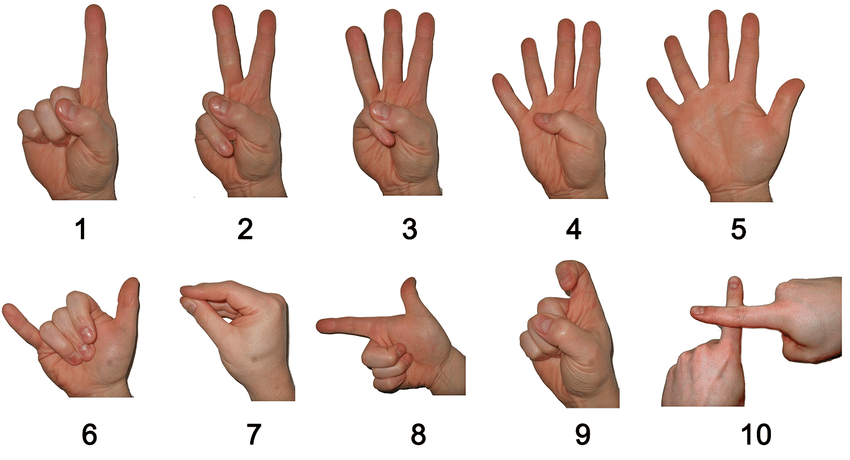
If all fails and you have no way of understanding the other person, or the other way around, you can always point. If you are ordering food, find a picture of the dish and point at it. If you want to reach a destination, find a (digital) map, and point where you want to go. It’s a good idea to learn “here” in the local language.
Conclusion
You can prepare as much as you want, but the language barrier is real and you will hit it at least once. And it’s not a problem as long as you keep a respectful posture towards the person you are trying to communicate with.
Don’t assume everyone speaks English and learn a few local words. Locals won’t be offended if you pronounce it wrong, as long as you are trying. And trying is the key to friendly and helpful people.
And if it does go wrong (wrong meal, wrong drink, wrong street)? Just keep smiling and try again or just accept it.
In the end it can be fun and a fun challenge to communicate with people from other countries. Isn’t that that whole point of traveling?
Find this post helpful? Buy us a coffee!
New here? Join our mailing list and be the first to hear about news, discounts and other related subjects.
This post may contain affiliate links that at no additional cost to you, we may earn a small commission (for which we are very grateful). We only recommend products we would use ourselves and all opinions expressed here are our own.